

Aged to perfection:
unveiling the timeless appeal of fine wine investments!
Introduction to the Liv-ex index
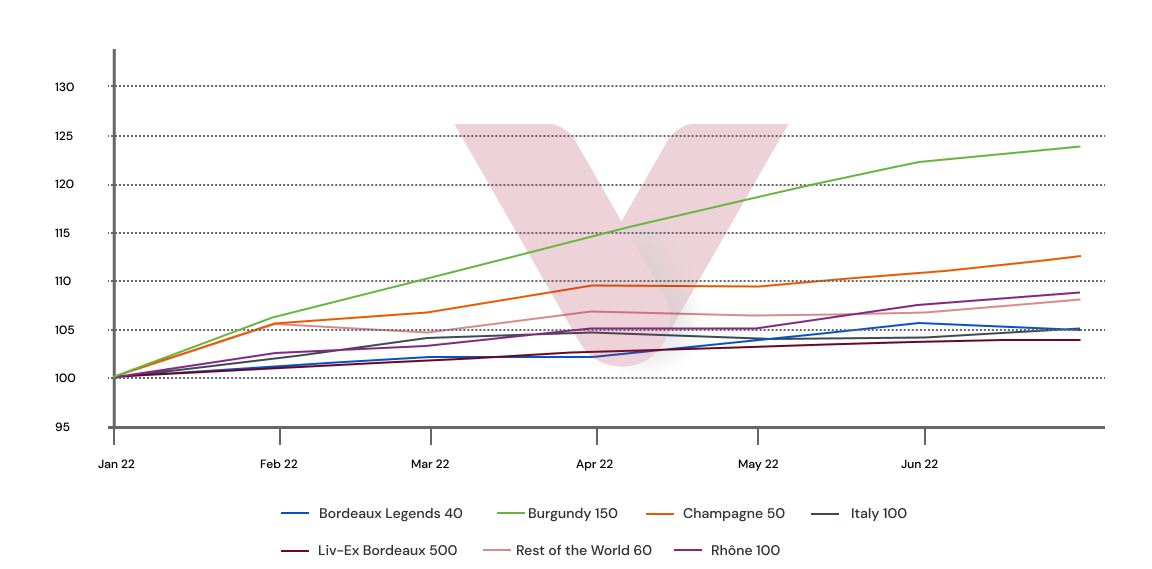
The Liv-ex 1000 index, or Liv-ex Fine Wine 1000, is a comprehensive fine wine benchmark by Liv-ex. It offers a broad view of the market by tracking price movements across diverse wines from various regions, vintages, and classifications. As a trusted benchmark, Liv-ex 1000 assesses market performance and trends, providing crucial insights into regional strengths. This aids wine investors, collectors, and industry professionals in informed decision-making.
The Liv-ex 1000 index is composed of ten sub-indices, each focusing on a specific segment of the fine wine market. These sub-indices include:
Bordeaux 50, Bordeaux Legends 40, Burgundy 150, Rhône 100, Champagne 50, Italy 100, Rest of the World 60.
A unique approach to diversifying your portfolio
The investment landscape is full of possibilities, from traditional stocks and bonds to alternative assets such as real estate, precious metals, and even art. One such alternative asset that's been garnering attention recently is fine wine. For many, wine is a passion, an indulgence, and a symbol of the good life. But increasingly, it is also being viewed as an investment tool. This article will discuss why investing in fine wine can be an attractive way to diversify your portfolio.

Historical stability
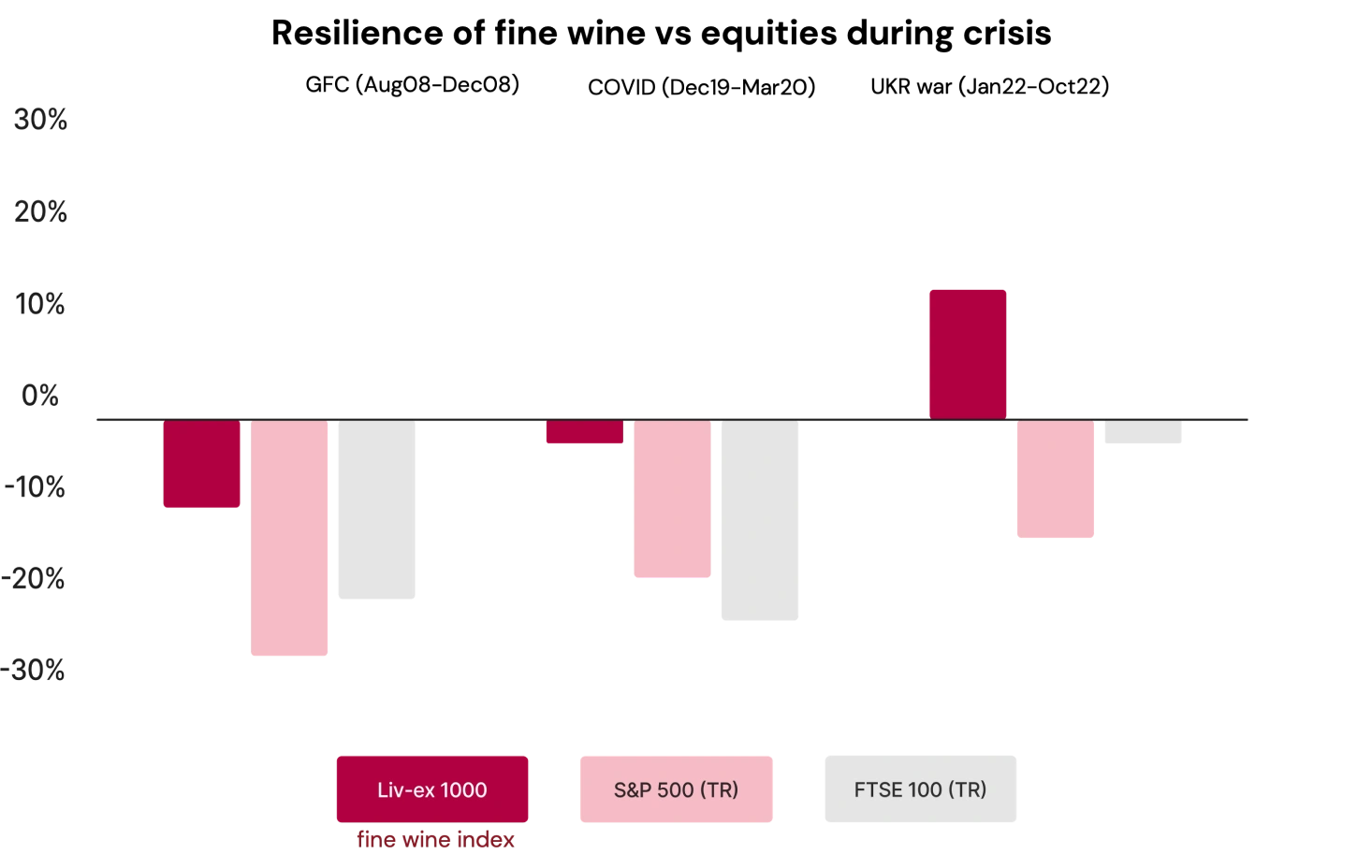
Fine wine, like other tangible assets, tends to have a more predictable market value compared to volatile assets like stocks or cryptocurrencies. Quality wine's value grows over time as it matures and becomes rarer, making it a relatively stable investment. Research suggests that the fine wine market has shown consistent positive performance over long periods, and it has proven relatively resistant to economic downturns.
Resistance to inflation
Tangible assets like fine wine, gold, and real estate have historically served as an effective hedge against inflation. This is due to their limited supply; there are only so many bottles of a certain vintage or appellation. As inflation causes the price of goods and services to rise, the value of these assets often rises in tandem.
Global demand
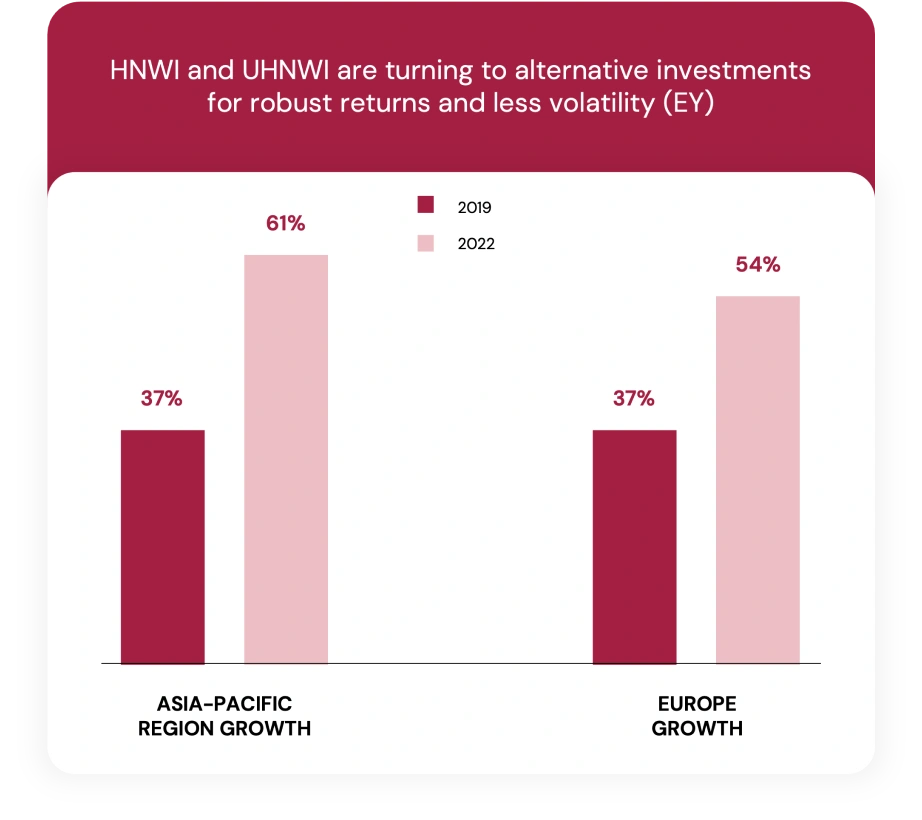
The demand for fine wine is global and has been rising steadily, especially in new markets like Asia. This international interest makes it less likely that the market will suddenly collapse due to factors affecting a single country or region. Furthermore, as emerging economies mature and grow, the number of potential wine investors is set to increase, bolstering demand.

Low correlation with traditional markets
The performance of the wine market tends to be uncorrelated with traditional financial markets. During the 2008 financial crisis, while many asset classes experienced significant losses, the fine wine market remained relatively resilient. This unique characteristic makes fine wine a suitable asset for portfolio diversification, as it can potentially offset losses in other parts of your portfolio.
Potential for high returns
Although investing in wine carries risks, as does any investment, the potential returns can be substantial. According to a report by Knight Frank, the price of fine wine has risen over 120% in the last decade, outperforming many traditional assets. Some rare wines can yield significantly higher returns.

Unique and enjoyable
Lastly, wine investment offers a unique pleasure that other asset classes cannot provide. For those with an interest in or passion for wine, the process of researching, buying, and holding wines can bring significant enjoyment. If the investment doesn't pay off as expected, you still have a bottle of fine wine to enjoy.
Conclusion
Investing in fine wine presents an appealing option for those looking to diversify their portfolio. Its historical stability, resistance to inflation, global demand, low correlation with traditional markets, and potential for high returns make it an attractive proposition. It's also an enjoyable, tangible investment that you can hold, appreciate, and ultimately consume. However, like any investment, it's crucial to do your due diligence and possibly seek advice from wine investment professionals. Investing in wine requires knowledge and understanding of the wine market, which can be complex and opaque. And while the potential returns can be impressive, there's no guarantee of profit.
As with all forms of investment, diversification is key. Wine should not replace traditional investments but can complement a well-balanced portfolio. Investing in fine wine can be a fruitful venture, both financially and personally, for those with an interest in this unique asset class.

Find more about wine investment in our Stories:
Embark on a Thrilling Journey with Sekabet Go for Unmatched Wins
Embark on a Thrilling Journey with Sekabet Go for Unmatched Wins Welcome to the exhilarating world of Sekabet Go, where every spin of the wheel
Fonbet apk odkrywa nowe horyzonty zakładów w Twojej kieszeni
Fonbet apk – Twoje mobilne kasyno zawsze pod ręką W dzisiejszych czasach, gdy mobilność i wygoda odgrywają kluczową rolę w codziennym życiu, aplikacje do gier
Fonbet Online ile Kazanç Sağlama Yolları
Fonbet Online ile Kazanmanın İncelikleri Günümüzde online kumarhaneler, eğlencenin yanı sıra kazanç sağlama potansiyeliyle de dikkat çekiyor. Bu bağlamda, Fonbet online platformu, kullanıcılarına sunduğu çeşitli
Discover the Excitement of Betting with Fonbet APK
Unleash Your Winning Potential with the Fonbet APK The world of online betting has witnessed a dramatic transformation with the advent of mobile applications, and
Лучшие способы использования промокода Fonbet для увеличения выигрыша
Как использовать промокод Fonbet для максимизации ваших шансов на выигрыш В мире онлайн-казино каждый игрок стремится к максимальным успехам и высоким выигрышам. Одним из способов,
Získejte výhodu s exkluzivním monacobet promokodem pro neomezenou zábavu
Získejte výhody s tajemným monacobet promokodem a rozjeďte své herní dobrodružství Úvod do světa MonacoBet Casino Výhody používání monacobet promokodu Herní nabídka na MonacoBet Aktuální
Keep in touch!
Be the first to know: sign up to our newsletter to hear about our latest news and events.